The Wonky Woolins is a multi-award-winning children's brand which, creates memories that last for generations with their range of ethically handmade and heirloom quality children's toys and baby gifts.
We sat down with the founder, Chloe Gardiner, and asked her about her experience starting and running her business and her journey with the LEO.
Tell us about your business. What is your background? What led you to setting up your own business?
The Wonky Woolins started with my grandmother. When she passed, her handmade toys down to me, I realised they'd been made with such high-quality materials and such old techniques that they were going to last for generations; they already had. I looked at what was in the shops at the time and it was the complete opposite: cheap, disposable, no character and no story behind them. That gap is what got me started. I began The Wonky Woolins as a teenager with €50 and a box of wool, at home, in Transition Year.
Why and when did you decide to become self-employed?
I ran The Wonky Woolins on a small scale all through school, alongside my exams. After my Leaving Cert I took a gap year to focus on it properly, and later started a commerce degree at the University of Galway thinking I'd do both. College wasn't for me. I'm a hands-on learner, and the coursework didn't reflect the business world I was already living in day to day. I made the call to leave, so I could commit fully to The Woolins. By that point, the business was growing enough that I could pay myself a small salary and I had other job offers on the table, so it felt like a secure decision rather than a reckless one, even though most people around me saw it as a huge risk.
What do you believe makes your business different from others in your industry?
We're not a handmade brand chasing a trend, we're built around longevity. Everything comes back to one question: will this still mean something in sixty years? That's not a marketing line, it's literally how long my granny's toys lasted. We also don't hide our production. I refused to send this to a faceless factory, so we partner with non-profits, social enterprises and fair-trade manufacturers who employ marginalised women across the globe who get fair trade wages and further education because they make our toys. All the finishing, embroidery, assembly and quality checking happens here in Dublin. Most toy brands can't tell you who made their product or what they were paid. We can, down to the person. And we lean into "wonky" on purpose. Perfection is what mass production gives you. Character is what handmade gives you. Every asymmetrical stitch is proof a real person made it.
Biggest challenges and opportunities to date?
Production has been the constant challenge. For the first three or four years I made every single toy myself. There were countless 20-hour days where I'd finish an overnight order run and stumble straight into a college lecture. Because I wouldn't outsource to an anonymous factory, finding and training ethical production partners took real time, and there were plenty of stressful setbacks along the way. We've since built reliable, trained partnerships across three countries, but it took years of trial and error, including training makers over WhatsApp voice notes through interpreters who didn't even know the crochet terms in English, to get there. The opportunity side of that same story is the biggest win: we now employ 150 women through those partnerships, on fair wages, and that number keeps growing. What started as my single biggest operational headache became the part of the business I'm proudest of.
Have you changed your business model or target market? What led to this pivot?
Yes. In the early days I was worried about how far The Woolins could actually scale, my hands had already developed strain from the sheer volume of crochet I was doing myself. Around that time, I also spotted a gap in the Irish market, post-Brexit, for giant arm-knitting yarn, so I launched a second business, Baa Baa Bandits, to test something that could scale faster. It did well, and it taught me a huge amount about importing and sourcing that I later brought back into The Woolins. On the customer side, my early audience skewed young, teenagers and early twenties finding the brand through social media. Over time I've deliberately shifted focus toward grandparents, aunts, godparents, generally who care about quality over quantity and want something that will actually last and be passed down. That shift wasn't an accident, it's who the product was always really made for.
How did you come into contact with the LEO and What supports did your receive?
I'd hit a wall with mentorship before the Local Enterprise Office came into the picture. They reached out about a space on a Lean launch programme. The advisor helped me see which of my two businesses had the most potential and guided me through the fundamentals of running one properly. I genuinely don't think The Woolins would be where it is today without that support. We've also had the opportunity to grow the business by taking part in shows like Showcase, Bloom and now the Ploughing with the LEO allowing us to grow even more.
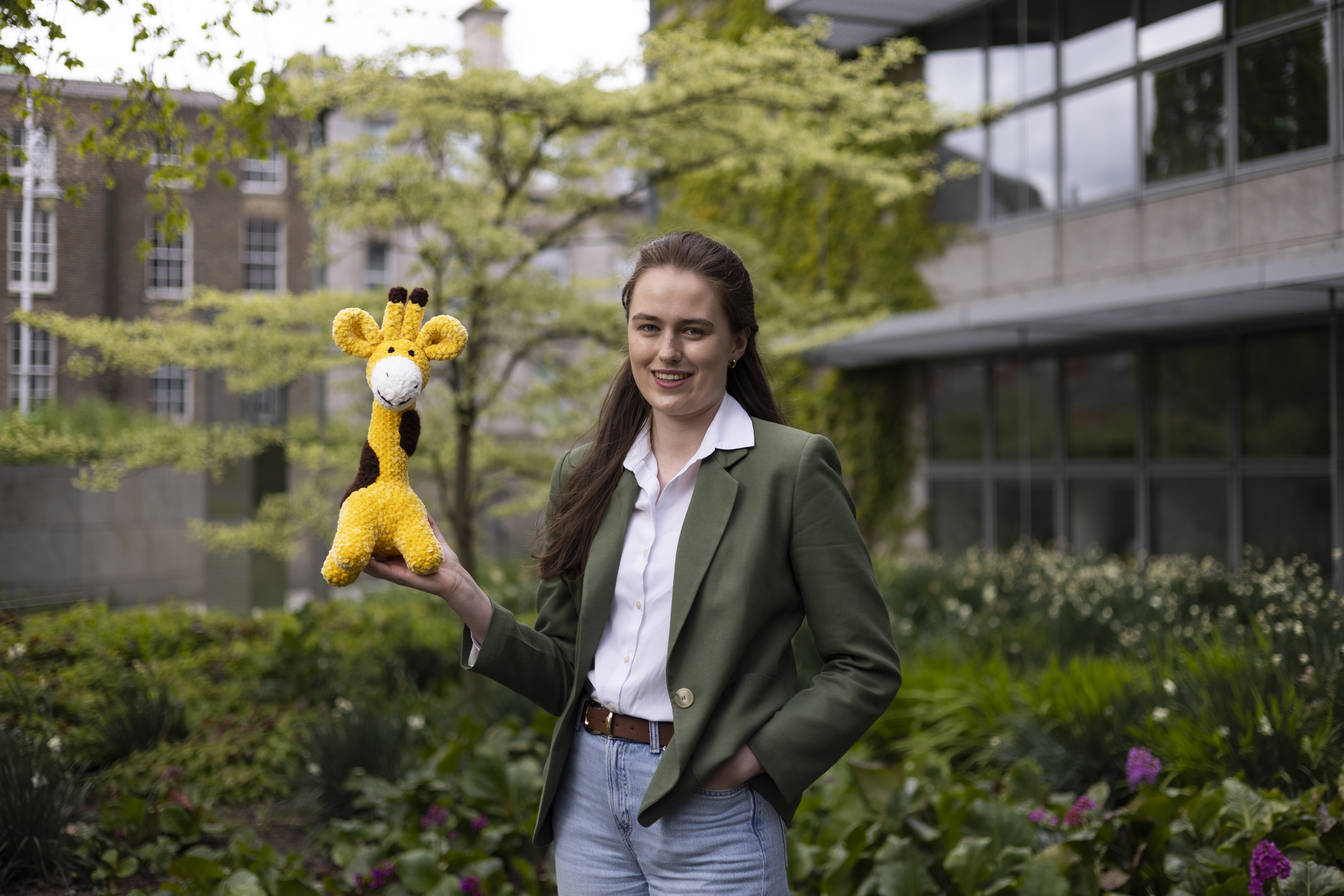
Photo: Wonky Woolins founder Chloe Gardiner at photocall for LEO at Bloom 2025
LEO Supports Received
- Mentoring
- Training
- Brexit Supports
- Building, Craft, & Design Programme
- LEO at Showcase Ireland
- LEO at Bloom
- Local Enterprise Village at the National Ploughing Championships
Plans for the future?
Our overarching goal is to keep growing the business and reach more people around the globe, exports already make up 55% of our business, and we want that international reach to keep expanding. Beyond that, the next chapter is about scale without losing what makes the brand what it is. That includes growing our maker partnerships so we can employ more women fairly, well beyond the current 150.
What advice would you give to new entrepreneurs?
Don't wait for people to believe in you before you start. I spent years being told I was too young to be taken seriously, and it never once meant the business wasn't worth building. The belief has to come from you first. Invest in your production and supplier relationships properly rather than chasing the cheapest option, it pays off far more in the long run than spreading yourself across multiple lower-cost suppliers. And say yes to the opportunity even when you feel underqualified for it. I applied to my first big pitch competition the same week as one of the hardest weeks of my life, half convinced I wouldn't get anywhere. Some of the biggest turning points in this business happened because I showed up to something I nearly talked myself out of.
What was one stand out moment that made you feel like you were on the right path, or one that made you rethink strategy?
I'd struggled for a long time to get anyone to see past my age and take the business seriously. Being backed by Theo Paphitis through his Small Business Sunday was one of the first times someone that established in business looked at what I was building and saw the potential rather than my age, and that reassurance mattered more than I expected. Around the same time I applied to GSEA, a student entrepreneur competition, almost on a whim, not expecting to get anywhere with it. I put a pitch deck together the night before the competition, finishing around 4am, and turned up terrified, surrounded by people running businesses far bigger than mine. I assumed I wouldn't get through. I did. I went on to pitch in Istanbul and later reached the semi-finals in Cape Town. Getting backed by giants like Theo and the crew at GSEA, all in that same stretch of time, is what proved to me The Woolins, and I, could go further than I'd let myself believe.